What a single week taught me about calm, resistance, and redirecting energy.
This week, I noticed something about myself.
I kept pushing. Not in a heroic way — more in the “rushing from thing to thing, half-present, half-scattered, hoping the momentum would somehow carry me through” kind of way.
There was a deadline at work, and I found myself sprinting toward it while trying to collaborate on an important workflow.
I finished the job, but everything felt rushed — not up to the standard I usually bring. I walked into a meeting without a plan and felt the conversation scatter before I’d found my footing. I didn’t make it to the gym. Didn’t get on the bike. Came home still buzzing with the noise of the day.
And yet…
There was one moment that didn’t feel like that at all.
The Effortless Moment
One morning, I had to drop my son to a university exam. It was on my way to work — nothing dramatic, nothing planned. But in the car, something unexpected happened.
We just talked.
Lightly.
Easily.
No weight.
No rush.
No agenda.
I wasn’t trying to be present — I was present. The moment designed itself. It hit me later that this was the only part of the week where I felt genuine flow. So I asked myself a question:
What if presence doesn’t come from trying, but from removing the friction that blocks it?
Where the Resistance Was Hiding
Once I saw it, I saw it everywhere:
- I rushed the work project because my mind was already overloaded.
- The meeting felt chaotic because I hadn’t given myself two minutes to centre.
- I didn’t connect deeply at home because I brought the day’s noise with me.
- I didn’t go to the gym because I hit the morning with resistance already built in.
None of it was about skill, motivation, discipline, or willpower. It was all friction. And friction creates force. Force creates rushing. Rushing creates disconnection.
The Two-Minute Reset
At some point in the week — probably in the middle of feeling overwhelmed — I realised something simple:
A deep breath is the doorway.
Not a metaphorical one. A literal one. A single breath where I ask:
“What does this moment actually require right now?”
Not what the day requires. Not what the project requires. Not what the world requires.
Just this moment.
It changed the way I saw everything:
- In a meeting, all I needed was one clear priority.
- In a conversation, I needed to arrive, not perform.
- At home, I needed to breathe before walking through the door.
- For work tasks, I needed the outcome, not the whole method.
And suddenly, the noise around me felt less like a storm and more like wind passing through branches.
The Night-Before Trick
Out of everything, the gym became the clearest mirror. I realised that I didn’t need a plan, a promise, or a motivational speech. I just needed to remove the morning resistance. So I started laying out my clothes the night before. Towel on the chair. Water bottle ready. Nothing complicated.
When I woke up, the friction was already gone. No decision needed. No negotiation. No battle. Just flow.
And I realised:
this tiny act was the physical version of that deep breath.
It wasn’t about fitness — it was about identity. It taught me to arrive in the morning the same way I arrived in that car with my son: clear, uncluttered, unforced.
The Zen Ninja in the Storm
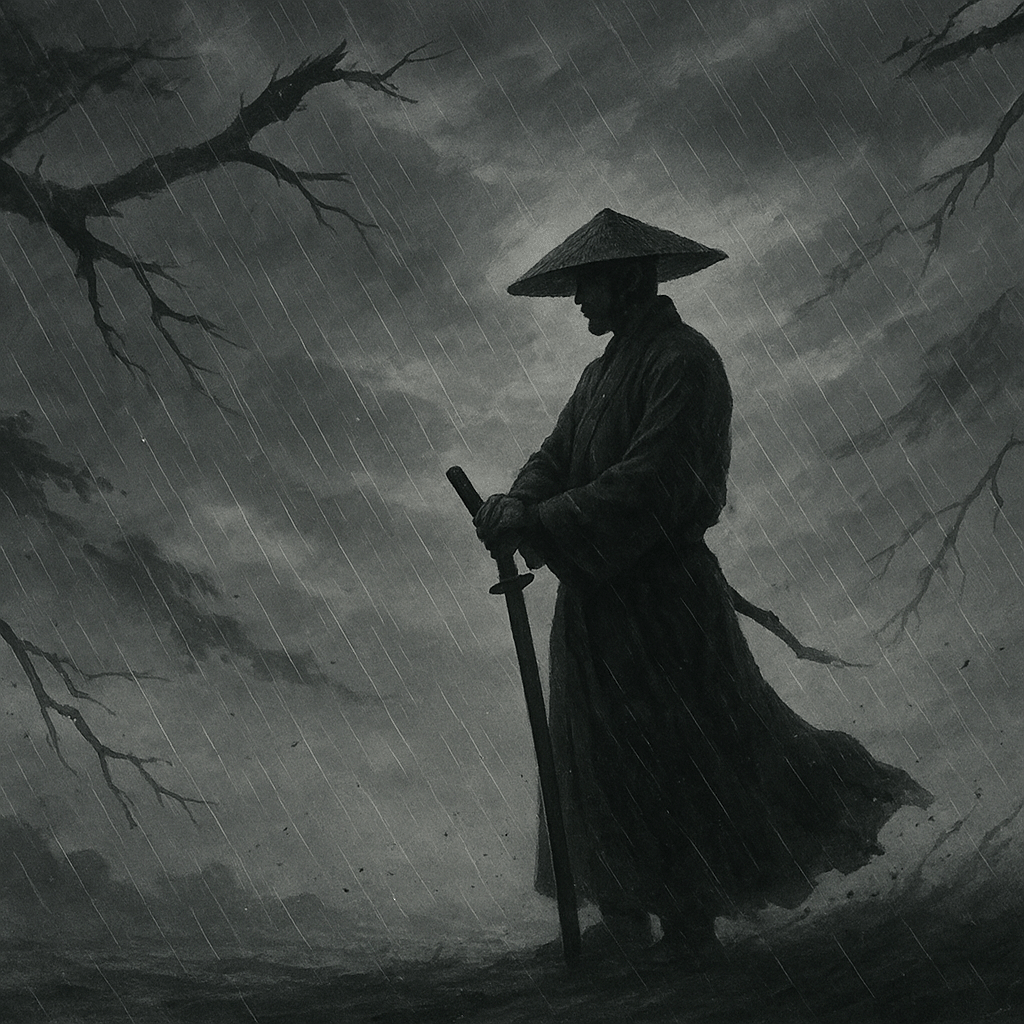
What I’m learning is that a calm person isn’t someone who has less to do. A calm person is someone who stops meeting every moment with a raised sword.
Some days I imagine myself as a Zen Ninja standing in the middle of a storm, leaning quietly on a sheathed blade.
Branches fall. Wind shifts. Noise rises. But instead of bracing, fighting, or rushing, I simply move aside. Let the unnecessary battles pass. Let the moment show me what’s actually needed.
This isn’t avoidance. It’s mastery.
The sword stays sheathed not because there is no challenge, but because most challenges don’t require force — they require clarity.
Why This Matters
This week taught me something simple, practical, and strangely profound:
- If I remove friction, calm returns.
- If I take a breath, clarity appears.
- If I prepare the moment before the moment, flow becomes the default.
- If I show up centred, the people around me feel it instantly.
And the beautiful part?
Anyone can do this. You don’t need to meditate on a mountain. You don’t need to restructure your life. You don’t need to reinvent yourself. You just need small pauses that create space for your inner calm to step forward.
Because in the end:
Flow doesn’t come from trying harder. Flow comes from stepping aside before the sword leaves the sheath.